
The Both-And of Self-Kindness: Why Loving Yourself Isn’t Selfish
Anna Christine Seiple
7 min read ⭑
“Please be kind to my friend A.C. She’s going through a lot right now.” Kristin paused, her eyes continued to speak to me with warmth and tenderness.
We were ending a pastoral care meeting, and these were the parting words she wanted to leave with me for that week. In one way, I felt deeply cared for, and I appreciated the sentiment of her statement. At the same time, I wasn’t sure how to respond.
She was right — I was going through a lot. My faith community, the people I considered to be my family and the safest place in the world, had suddenly become the least safe place I had ever known. Extra doses of kindness were certainly helpful in the midst of a painfully disorienting season. This type of kindness, though — a self-kindness — I couldn’t quite grasp. I hesitantly replied to Kristin with a soft, “OK, I’ll try,” and left our meeting perplexed, wondering, What in the world would it look like to be kind to myself?
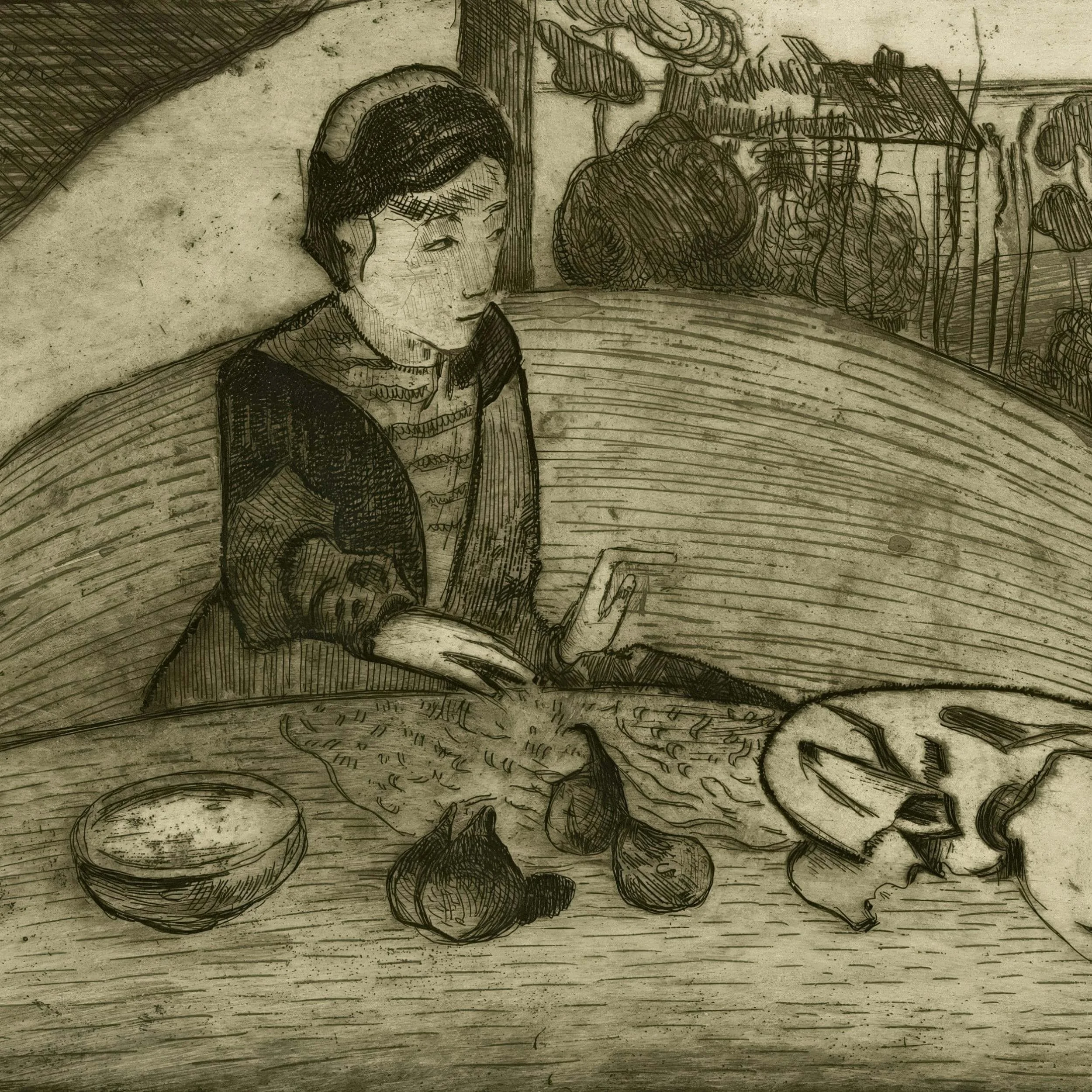
Art Institute of Chicago; Unsplash
I knew what kindness looked like when extended to others. Kristin was offering me kindness right before my eyes. She was freely flowing with gentleness, dignity, tenderness, respect, warmth and patience — and these were things I would have no problem extending to any other person. Kindness from one person to another made sense to me. But to ask me to be one of the people who would be kind to myself didn’t feel quite right. A dozen objections swirled in my mind: Wasn’t it my job as a Christian to not think about myself? Weren’t my affections, attention and attunement meant to be directed externally rather than internally? Wouldn’t self-kindness inevitably become self-focused, self-serving, and above all, selfish?
I had no category for Christians intentionally offering themselves gentleness, dignity, tenderness, respect, warmth and patience. Based on the categories and theology I had been taught, this would be the opposite of considering others more highly than yourself.
It wasn’t until a couple of years later that something started to shift my perspective.
Understanding Biblical Compassion
Working on a degree in biblical studies and as a mental health counselor helped me begin to see things differently. These parallel pursuits prompted ample opportunities for me to thoughtfully wrestle with intersections between Scripture and the very real messiness of our lives. And more than any other passage, it was the time I spent studying Exodus 34:6 — knee-deep in Hebrew lexicons, dictionaries and commentaries — that shifted my understanding of kindness and self-kindness.
It says: “The Lord passed before him [Moses] and proclaimed, ‘The Lord, the Lord, a God merciful and gracious, slow to anger, and abounding in steadfast love and faithfulness’” (ESV).
You’ve probably heard that verse dozens of times. I certainly had. And I already knew all the ways it described God: compassionate (or merciful), gracious, slow to anger and abounding in lovingkindness and faithfulness. What I didn’t know is that the first word — compassionate — wasn’t referring to a generic kind of mercy. Instead, its root noun means womb, creating an image of a mother caring for her infant — care that is also merciful, patient, overflowing with an enduring, relational, and kind love, and, last but not least, a reliable faithfulness.
Steeping in the varied dimensions of these words freed me to embrace the extent of God’s kindness, the very kindness we’re invited to embody as those who are created in his image — or as some Hebrew scholars would say, as God’s image. And so I couldn’t help but wonder, if it’s a good and beautiful thing for us, as God’s image, to embody divine compassion to all people created by God, why would we exempt ourselves from this equation?
The Radical Vulnerability of Self-Kindness
It was in this season that I began to see self-kindness as more than a spiritual discipline or therapeutic technique. More than this, I realized that self-kindness is a sacred invitation to embody divine compassion and kindness within, letting it spread as a soothing balm through the spaces inside, reorienting ourselves to who we are — people created in God’s image, first declared good, and inherently possessing dignity. And still, self-kindness felt foreign and confusing.
My work as a therapist taught me that I wasn’t the only one who felt disoriented by this invitation. Each week, my clients would let me in on their internal dialogues, calling themselves stupid, tearing themselves down with criticisms and blaming themselves for things that were never within their control. Whether we made sense of these internal dialogues as core beliefs, stories they felt stuck in or the perspectives of protective parts within, there was a common thread between them all: they stemmed from messages from others, including parents, siblings, friends, teachers, coaches, pastors, youth group leaders and anyone else who held an important role in their lives.
As I listened to their internal pushback against the practice of self-kindness, I came to know the tender depths within my clients that had been pummeled with anything but kindness for years, sometimes decades. I started to see just how risky and vulnerable self-kindness is — being kind to ourselves means we are likely to make contact with wounded depths that have not received kindness in the past and instead have received harsh, harmful messages. Even the gentlest of healing salves rarely brings initial comfort to a deep wound. At first, it usually stings.
Beyond my seat in the therapist’s chair, I personally know how much easier it can feel to stay in muscle memories of self-shame, self-criticism and self-harshness, to keep moving in our overbusy lives that don’t have much margin for curiosity, compassion or kindness. I also know there are religious spaces that offer a badge of honor to (intentionally or unintentionally) dishonor our createdness to serve others. And yet I believe there’s a sweeter story we can start living out in our lives that’s worth the initial discomfort or sting that can come with self-kindness. I believe it’s worth the risk to be vulnerable and play with self-kindness as a spiritual practice, exploring the dimensions of God’s image in us and honoring God’s creation in every person, whether that be ourselves or someone else.
“Learning self-kindness will be a lifelong process.”
Self-Compassion: A Lifelong Journey
To dip my toe into practicing self-kindness, I had to start by tracing the messages that shape how I view myself, slowing down with curiosity to consider what has informed those messages and asking whether they embody God’s kindness and compassion. Then I had to get to know the internalized messages that didn’t embody God’s kindness or compassion — exploring where they came from and why it might be risky to reject them in trying something new. Could there be a protective function behind self-criticism or shame that might feel threatened by kindness in the place of harshness? Could there be a wound deep within that would be overwhelmed by finally receiving kindness, almost like running hot water over frozen hands?
As I parsed through these curiosities, I had to journey alongside trusted and safe friends who patiently created space for me to borrow from their embodiment of God’s kindness so I could slowly step into my own. Like arm floaties securing a small child on the surface of the water, I needed support from others to keep me from sinking, a process that took time and was anything but a smooth swim.
Learning self-kindness will be a lifelong process. But if someone were to tell me today, “Please be kind to my friend A.C.,” I would have a far different reaction than I did over a decade ago when Kristin first spoke those words. There’s still some old muscle memory and, at times, the tightness of scar tissue. And also, I savor the invitation before me, an invitation to receive, embody and offer divine compassion.
The sweetest part of my journey with self-kindness has been placing it in the larger context of life. Identifying internalized messages of self-criticism and shame can reveal areas that need healing in external relationships — families, communities and systems around us — and in systemic spaces that are just as tender and can be transformed, even if ever so slowly, by how we treat ourselves.
Self-kindness is a crucial piece of a both-and of divine kindness in us, which can be part of a larger story of restoration, both within and around us — sending new messages, writing new scripts, creating something new and beautiful, not only in our internal words but also with the external world we are woven into.
Now, wherever you find yourself, I hope these words have sparked curiosity about how you might compassionately cultivate self-kindness — taking your time, tuning into the messages that conflict with this practice and tending to the depths that have been tangled up with those messages, so that you can move toward healing and peace.
Reflection
If you’d like to join me in reflecting on the roadblocks that can complicate self-kindness as a spiritual practice, consider spending time with these prompts through journaling, drawing or contemplation while sitting still or taking a walk outside.
Think of someone you adore, someone you would never withhold any amount of kindness or love from. If that person were in some sort of pain, how would you respond to them? Next, consider: when you are in pain, how is your response to yourself any different? What surprises you about the differences? What grieves you about the differences? What might it look like to offer yourself the same kindness you’d offer to this other person? How might this be a reflection or an embodiment of divine kindness?
Practice
If you’d like to explore playing with the spiritual practice of self-kindness, consider walking through the following prompts.
Throughout your day — or at the end of it — consider how you view yourself. For example, reflect on a time that you were running late, made a mistake, forgot something, or handled an interaction with another person in a way that didn’t feel good. How did you respond to yourself in those moments? How do you view yourself when you look back on those moments now?
If it feels comfortable and safe to do so, place a hand over your heart and abdomen and take a breath. See what it’s like to imagine exhaling anything that is not rooted in kindness —anger, criticism, shame or blame —leaving your body like mist or dissolving into particles as you exhale, letting your body release tension or stress. Next, imagine breathing in kindness, drawing from God’s unending reservoir. Notice how this feels. See what it’s like to imagine embracing this kindness, letting it sink into your soul, nourishing any neglected or hurting depths within.
If you notice any discomfort, pause to reflect on whether there may be wounds that sting when receiving this compassionate response. If it feels impossible to offer compassion or kindness to any part of you — especially any wounded or hurting parts of you — see what it’s like to imagine borrowing from God’s or that of a person who embodies divine compassion for you.

Anna Christine (A.C.) Seiple is a licensed counselor, retreat leader and researcher. She loves integrating neuroscience with spirituality, honoring the entirety of our created being. She is a postgraduate researcher at the University of St. Andrews in Scotland, exploring conversations between ancient Christian contemplation and present-day therapeutic interventions. She loves good food, a good laugh, quality time with loved ones and finding ways to move through each day playfully. Connect with A.C. on Instagram @a.c.seiple and find her guided meditations here.