Too Busy for God?
Joshua Becker
4 min read ⭑
As you look at all you have to do on your calendar, how many times do you catch yourself groaning or complaining out loud, “I’m so busy”? You’re far from alone in this feeling of being over-scheduled. According to one survey, 60% of U.S. adults say they at least sometimes feel too busy to enjoy life, and 12% say they feel this way all or most of the time.
What, specifically, is taking up so much of our time? One of the biggest categories in our use of time is shopping and housework. Want to have your mind blown? According to studies, on average we spend two hours per day buying things and taking care of the things we already own.
Have you ever been in a group setting and been asked the discussion question, “If you had one extra hour in your day, how would you spend it?” Well, according to the research results I just mentioned, that doesn’t have to be a hypothetical question. You literally can have an extra hour or two in your day if you minimize!
TROY ALLEN; Unsplash
But when we’re overbusy making and spending money and managing our possessions, something has to give. For believers, sadly, it’s often our pursuit of quality time with God that gets squeezed out first.
Today, less than half of Christians read the Bible as much as once a week. In fact, by the year 2022, America had reached an all-time low for Bible reading. There seems to be an inverse ratio between how much we own and how much time we spend reading God’s Word.
Meanwhile, about 60% of Christians pray daily, though most prayers last less than a minute. Busyness is the reason most often cited by Christians for not praying more.
One psalm compares the desire to be in the presence of God to extreme thirst.
As the deer pants for streams of water,
so my soul pants for you, my God.
My soul thirsts for God, for the living God.
When can I go and meet with God? (Ps. 42:1,2, NIV)
A lot of us are thirsting for God and yet not taking the time to drink more than a few drops at a time.
We ask ourselves, When can I go and meet with God? and then answer, Maybe after I get back from Costco. Or When I’m done with this part-time job I took to pay off the credit cards. Or If I have time after I straighten up the mess in the living room before my mother-in-law comes over.
Let me point out that none of us is as pressed by responsibilities as Jesus was when crowds swarmed to him for healing and for the words of life. Yet Jesus knew his soul’s need and repeatedly got away to be with his Father in prayer (Mark 1:35; Luke 5:16 NIV).
There may be many strategies for reducing busyness, such as cutting back on commitments and setting more boundaries. But for most of us, the single most attainable way to reduce busyness, and then to secure our time gains permanently, is to minimize our possessions.
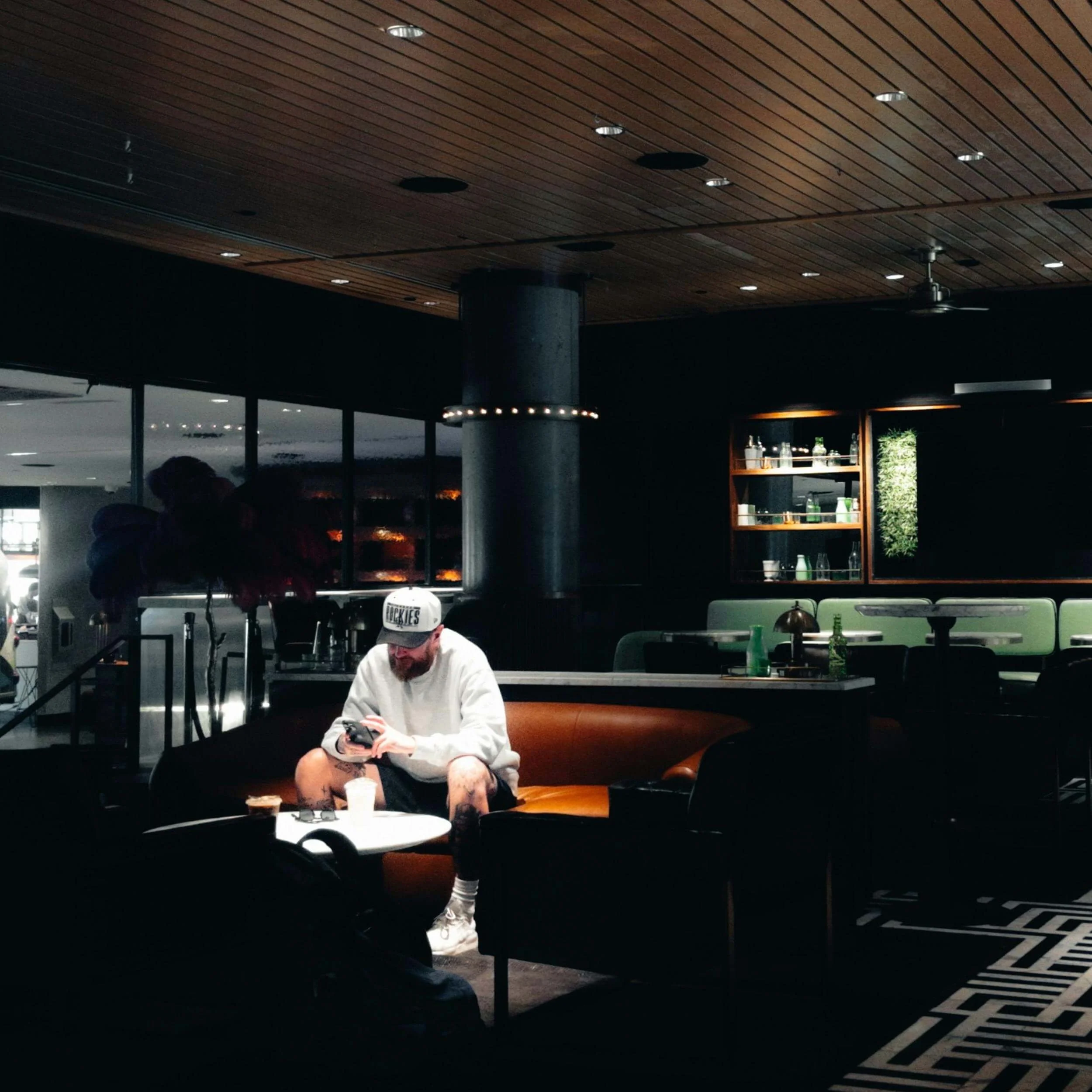
Of course, reducing our busyness doesn’t in itself guarantee that we will spend more time in the presence of God (what a waste if we employ our new freedom for something like endless phone swiping!), but it will at least eliminate an obstacle to the life of devotion. If our souls are really panting for God, we must go to him for the living water that will satisfy our thirst.
“How sad that trinkets manufactured in the world around us would pull us from the Spirit’s voice in our lives.”
Don’t ever settle for excessive busyness as “normal” if it’s keeping you from what’s most important — knowing, loving and becoming more like Jesus. Imagine turning your home into a sanctuary of calm, where your thoughts can naturally turn toward your Savior.
Turning Down the Volume on Visual Noise
If you’ve ever gone on a spiritual retreat to a monastery or convent, you know how these spaces tend to be peaceful, clean and uncrowded as the members of the religious orders go about their daily routines. This is uncluttered faith in an uncluttered space. The monks purposefully own less so they can focus more of themselves on God.
I am not saying you should become a monk or nun. But we can sure stand to learn a lesson or two from their example, don’t you think? They’ve acquired wisdom in simplicity over the centuries that their orders have existed. And anyway, doesn’t a possible connection between a sparsely furnished and minimally decorated space and a mind set “on things above, not on earthly things” (Colossians 3:2 NIV) simply make sense?
Too often, though, our clutter creates “visual noise.” We look around our home and see books and knickknacks crowding our shelves, unwashed dishes on a countertop or baskets of unfolded laundry on our floors, and our brain receives stimuli, just as if we were listening to street noise at a busy corner or the noises of a crowd at a ballpark.
The negative effects of visual noise are well known. It hinders our ability to concentrate, slows our learning and contributes to fatigue.
And what about its impact on our spiritual lives?
Imagine you are having your daily Bible reading and prayer time and are trying to settle your spirit and focus your mind on God, all while the contents of your room are screaming at you for attention. In a direct way, your possessions could be drawing you away from the spiritual life.
How sad that trinkets manufactured in the world around us would pull us from the Spirit’s voice in our lives.
Reducing visual noise in your home can help you and your family members throughout the day. I especially encourage it for people who work at home. And for people who want to have a home that is conducive to worship and prayerfulness, it is essential.
The only way to reduce visual noise is to keep fewer things around. Remove possessions, and turn your attention to the things of God.

Joshua Becker is the founder and editor of Becoming Minimalist, a website that welcomes over 1 million readers each month and has inspired millions around the world to consider the practical benefits of owning fewer possessions. He is an international speaker, a bestselling author, and a former ordained pastor. He’s also the founder of The Hope Effect, a nonprofit changing how the world cares for orphans.
Taken from Uncluttered Faith by Joshua Becker. Copyright © 2026. Used by permission of WaterBrook.